

Serving clients across PA, NJ, VT, SC and FL, based in Philadelphia
Therapy for Sleep Anxiety
Specialized, focused, and effective in just 6-8 weeks.
Are stress and worry holding you back from enjoying time with loved ones, excelling at work, and getting restful sleep?

Are you trying your best to sleep well but instead you are left feeling frazzled, foggy, and fed up?
Does this sound familiar?
You want to sleep peacefully, but instead, your mind is racing and:
Worrying about the health impact of insomnia “I have enough health issues already, I don’t want insomnia to make it worse.” “I want to get better” “I want to avoid sleeping pills and improve my health, but I’m so stuck”
It almost feels like a phobia of sleeplessness.Running through to-do lists “Did I send that email yet?” “Did the dog go out?” “What are we going to do for dinner tomorrow…”
Thinking about the future “If I don’t sleep well, how will I ever manage?” “What if I have to call out of work?” “I have so much left to do to meet the deadline, but I’m so exhausted.”
Rehearsing conversations or worrying about loved ones “I’m worried about ___. What if I can’t get through to him?” “Ugh, why did I say that? They probably think I’m an idiot.”
All these thoughts get in the way of sleeping… which gives you yet another thing to stress about.
It doesn’t have to be this way.
Together we can address sleep anxiety at the source.
Imagine a world where…
You feel empowered and at ease with sleep, knowing you have tools to manage sleep anxiety on your own, reducing or eliminating reliance on sleeping pills, and other sleep aids.
Imagine a world where…
You have established strategies to put your mind at ease when your head hits the pillow and you have found a natural rhythm using quality sleep timing and unconscious associations.
Imagine a world where…
You have specialized relaxation techniques that calm your mind and prepare your body for sleep — no matter what the day throws at you.
How this works:
Anxiety lives in both the mind and the body.
In CBT-I we address both.
Paired with targeted relaxation techniques to address physical tension, Cognitive Behavioral Therapy for Insomnia (CBT-I) gives you a chance to work through and sort your thoughts. We also use the power of learning by association to reduce anxiety at an unconscious level. (1)
Learn more about this method on the CBT-I page.
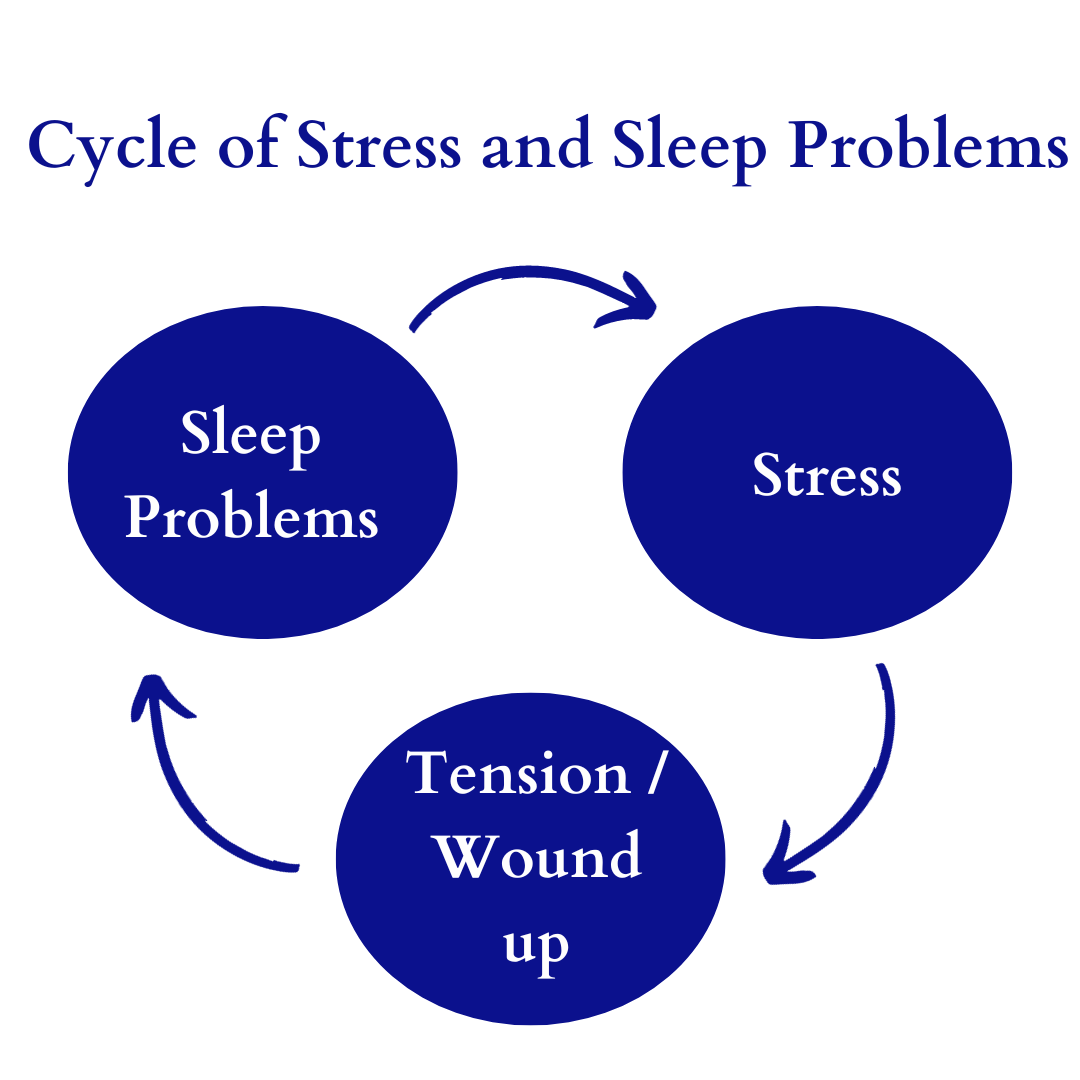
Stress and sleep problems can become a vicious cycle. Sleep problems can lead to stress. This stress leads to feeling wound-up and tense, which then makes it hard to rest and fall asleep. (1)
If it were as easy as just “stop worrying”, you would have already done that. Perhaps you’ve tried strategies to stop worrying, like counting backwards from 100, or counting sheep, but thoughts and worries end up distracting you before you can finish and doze off.
Let’s use science-backed strategies to break this cycle together. (2)

Peaceful Sleep is Possible
Therapy for sleep anxiety can help you experience:
More restful nights.
Feeling lighter, freer, more at ease.
Feeling More present and connected in relationships.
Living more “in the moment” and less in future worries and past mistakes.
Less worried about being judged, and feeling more free to be yourself.
Want proof?
I get it. It can be hard to imagine breaking out of this vicious cycle.
Check the citations below for more information and to see the scientific articles that have studied and proven this method.
Frequently asked questions about sleep anxiety
-
Treating sleep anxiety typically involves a combination of: good sleep practices, psychological strategies, and relaxation techniques to manage the anxiety that is specifically related to sleep.
-
Great question! Feeling anxiety before bed can be caused by a variety of factors. Here are some common reasons why someone might be experiencing anxiety before bed:
Stressful Events: If you're dealing with stress during the day, it might show up as anxiety at night when you have fewer distractions.
Negative Sleep Associations: If you’ve had trouble sleeping before, you might associate your bed with the frustration of not being able to sleep, which can create a cycle of anxiety.
Worrying Thoughts: The quiet of the night can sometimes cause worrisome thoughts to become louder, and without the distractions of the day, these thoughts may provoke anxiety.
Energizing Activities Before Bed: Intense exercise or doing work-related tasks close to bedtime can increase cortisol (the stress hormone), making it difficult to relax.
Biological Factors: Your body's internal clock, or circadian rhythm, could be out of sync due to irregular sleep patterns and contributing to anxiety.
Mental Health Factors: Anxiety before bed can also be a symptom of underlying mental health conditions like: generalized anxiety disorder, panic disorder, or depression.
This list is not exhaustive. In a first appointment with a therapist, your specific needs and symptoms can be discussed to understand the root cause for you and set up a plan to address it.