
Why am I more anxious at night?
Anxious thoughts and anxiety in general tend to be more common at night.
There are many reasons for this and some of the reasons work together to create a vicious cycle.
The Body Clock
The body clock or Circadian Rhythm is in charge of many things including digestion, sleep, energy levels over the course of a day or roughly a 24 hour period.
Studies have shown that anxiety follows a circadian pattern where anxiety symptoms tend to be more severe in the afternoon and evening. (1)
Unprocessed stress of the day comes out during quiet moments at night
When the mind has a quiet moment, it may reflect on problems or concerns that have built up throughout the day.
For many people, the very first quiet moment of the day is in the evening or at bedtime. If you notice to do list items, worries about family or friends pop up in the evening during quiet moment this may be playing a role.
Associations
Another reason that might contribute is stress associated with bedtime.
Someone with sleep difficulties may be experiencing sleep deprivation, which increases anxiety the next day (including next night) which can then make it difficult to sleep the following night, which then leads to more sleep deprivation.
This creates a cycle that can be hard to break.
Learn more on the sleep anxiety page
Over time a person can become conditioned or trained to feel anxious in bed.
At first, it may have started with a stressful time at work, or in life, and worries happened in the bed, this led to sleepless nights, and worry about not being able to sleep or other stressors.
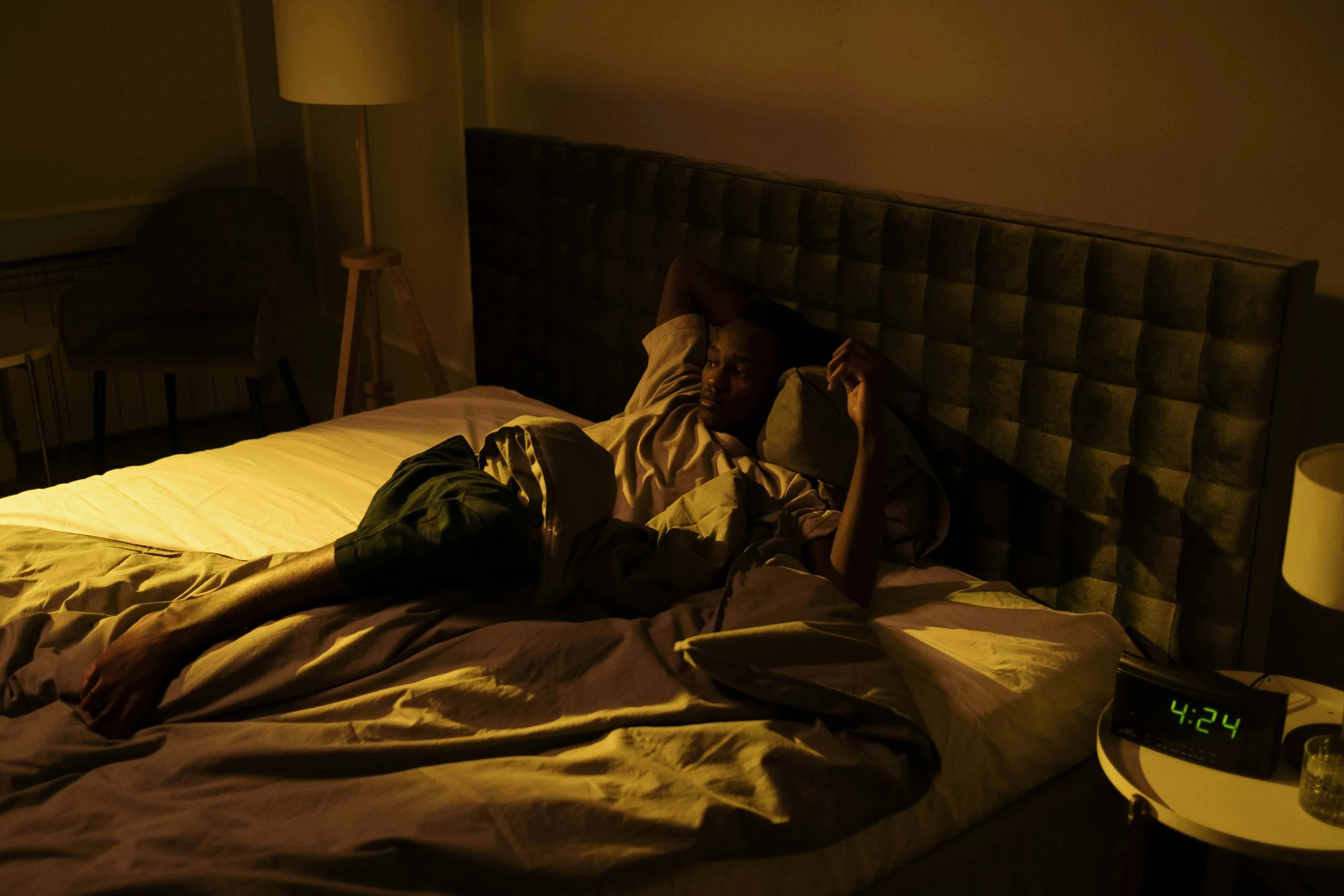
Over time the body learns, “The bed is a place for stress” and will start to create feelings of anxiety even when there’s nothing wrong. The anxiety may seem to come from nowhere.
I often hear clients say “I can get relaxed before bed, but when I get into bed, all the stress comes flooding back.” This might be a sign of this conditioned stress response or a trained association between the bed and sleep. This association can be broken with a specialized approach.
While relaxation exercises like meditation can help some people, if you find that they’re not working, or maybe they work for a few minutes but wear off immediately, it may be helpful to break the underlying association between the bed and anxiety
CBT-I (cognitive behavioral therapy for insomnia) can be an effective treatment that can help both anxiety and sleep difficulties and ease nighttime anxiety.